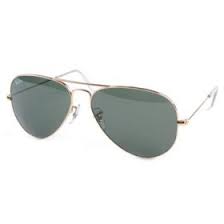
(Taken from www.luxottica.com, for educational purpose only)
Foundation
Luxottica Group originated in 1961, when Leonardo Del Vecchio set up Luxottica di Del Vecchio e C. S.a.S., which subsequently became a joint-stock company under the name of Luxottica S.p.A. Having started out as a small workshop, the Company operated till the end of the ‘60s as a contract producer of dies, ferro-tagli, metal components and semi-finished goods for the optical industry.
Leonardo Del Vecchio gradually widened the range of processes until he had an integrated manufacturing structure capable of producing a finished pair of glass. 1969 saw the crucial turning point, the launching of the first frames under the Luxottica brand: the contract producer became an independent manufacturer. Shortly afterwards, the presentation of its first collection, at Milan’s MIDO (an international optics trade fair), made the brand a definitive success.
Expansion in wholesale distribution
In the early ’70s, the Company sold its fames exclusively through wholesale dealers. In 1974, after five years of sustained development of its manufacturing capacity, Del Vecchio understood the importance of directly controlling distribution and started to pursue a strategy of vertical integration. This aimed to distribute frames directly onto the market. The first step was to acquire Scarrone S.p.A., a Turin-based distributor with many years experience in the sector and vital knowledge of the Italian market.
International expansion began in the ‘80s with the acquisition of independent distributors, the opening of branches and in a number cases the forming of joint-ventures in the main foreign markets. Having started with a commercial partnership in Germany in 1981, the Company’s international wholesale development culminated in the acquisition of Avant Garde Optics Inc., a wholesale distributor on the United States market.
Eyewear: a new frontier of fashion
In the meantime, Luxottica continued to invest in its products. The acquisition of La Meccanoptica Leonardo, owner of the Sferoflex brand and an important flexible hinge patent, enabled the Company to boost the image of its products’ quality and increase market share both in Italy and in other major European markets.
But it wasn’t till the end of the ’80s that spectacles, till then perceived as mere sight-correcting instruments, underwent the crucial evolution into “eyewear”. Continual aesthetic focus on everyday objects and interest on the part of designers in the emerging accessories segment put prescription and sun glasses in a new light. In 1988, Luxottica embarked on its first collaboration with the world of fashion, entering a licensing agreement with Giorgio Armani.
The Company followed up that initial experience (terminated in 1993) with numerous others, gradually building a world-class brand portfolio featuring names like Bvlgari (1996), Salvatore Ferragamo (1998), Chanel (1999), Prada, Versace (2003), Donna Karan (2005), Dolce & Gabbana, Burberry (2006), Polo Ralph Lauren (2007) and Tiffany (2008).
As for house brands, the Company slowly expanded in the sun segment by buying “Vogue” (1990) and the famous Persol (1995), a brand with a glorious tradition and a middle/high-end positioning.
Retail distribution
In the ’90s, the Company continued to develop its distribution network by opening new commercial subsidiaries, the Japanese Mirari being the mot significant. In 1995, Del Vecchio once again broke the mould, by acquiring US Shoe Corporation, owners of LensCrafters, North America’s biggest retail optical chain. Luxottica thus became the world’s first eyewear manufacturer to enter the retail market, thereby exploiting its synergies with its production and wholesale business and boosting penetration of its products through the 870 stores then owned by LensCrafters.
Ray-Ban
In 1999, Luxottica definitively claimed global leadership status by acquiring Ray-Ban, the world’s best known sunglasses. Previously specializing in prescription frames, the Company thus assured itself a crystal sunglass technology, and the manufacturing capacity to go with it, and upgraded its portfolio with brands like Arnette, REVO and Killer Loop.
A brand that had been waning for some years but still had enormous unexpressed potential, Ray-Ban was successfully relaunched thanks to its rapid integration and a powerful advertising campaign that restored its former prestige. The launch of its first prescription frame collection later signaled the brand’s definitive return to fame.
A decade of strong growth
After integrating the assets acquired from Bausch & Lomb in record time, Luxottica resumed growth at awesome rates in all its business segments and across all geographical regions. In this it was helped by new managers from the outside, and especially CEO Andrea Guerra, who has headed the Group, with chairman Leonardo Del Vecchio, since 2004.
On the retail front, the Company gained world leadership in just a few years by acquiring chains all round the world, including Sunglass Hut (2002), the world’s biggest distributor of premium sunglasses, OPSM Group (2003), the no. 1 optical player in the Asia-Pacific region and owner of the OPSM, Laubman & Pank and Budget Eyewear chains, and finally Cole National (2004), bringing with it North America’s no. 2 operator, Pearle Vision, and an extensive licensed brand store business. In 2005, the Company started up in China, where LensCrafters immediately became the leading brand in the high-end market thanks to a number of acquisitions followed by renaming of stores. In the meantime, the ground was prepared for expansion in high potential markets like the Middle East, South Africa, Thailand and India.
In its wholesale business, prestigious new licensing agreements were backed up by an increasing commitment to research, product quality and manufacturing excellence, whilst distribution developed in the direction of further customer segmentation and emerging sales channels, such as large shopping centers and travel retail.
Oakley
In 2007, Luxottica acquired California-based Oakley, the world’s leading sports optical brand, for 2.1 billion dollars. The potential of this operation was exceptional: Oakley was not only a brand known and appreciated worldwide but also brought with it an impressive portfolio including Oliver Peoples and the Paul Smith license, not to mention a retail network of over 400 stores. Integration of Oakley in record time confirmed Luxottica’s world leadership and laid the foundation for a major new process of long-term growth.

No comments:
Post a Comment